01
Start with a real constraint
A game must feel good in somebody’s hand. A garden plan must agree with the ground. A forecast must explain why its future is different. The work begins where a generic AI answer stops being enough.
Our AI projects
A spatial game. A real garden. A future App Store. These are the laboratories behind Collab365’s approach to AI.
Collab365 is led by husband-and-wife team Mark and Helen. We ship these projects to push modern AI as hard as it will go under real constraints. Foldami was built in 19 unattended hours, AppStore2031 in 36. Then we bring every lesson back into Spaces for our members. The demo is not the point. The repeatable method our members can reuse is.
2007
Company roots
Led by Mark and Helen today
55hrs
Unattended AI build
Foldami + AppStore2031, shipped
3
Live AI projects
Two shipped, one ongoing
0
Extra hires
The human effort saved is the point
AI gives people extraordinary reach. It also creates plausible mistakes at extraordinary speed. Our work is about building the systems that separate those two things.
A game must feel good in somebody’s hand. A garden plan must agree with the ground. A forecast must explain why its future is different. The work begins where a generic AI answer stops being enough.
We give sources, states, rules, tests, and acceptance criteria a permanent home so quality does not depend on remembering one clever conversation.
Foldami replays the move. The garden traces the claim. AppStore2031 keeps the source, assumption, challenge, and withdrawal attached. The check is part of the architecture.
We ship the game, publish the garden record, and make the forecast contestable. The useful evidence is what survives contact with players, measurements, critics, and time.
Product experiment
Foldami begins with one simple instruction: fold the paper until nothing is left on it. Underneath that quiet surface is a deterministic engine, a generated puzzle catalogue, a touch-first product, an embeddable package, and a Worker that refuses to believe the client’s score.
19hrs
Unattended Codex build
Built end-to-end by Mark and Helen, with the AI working unattended. Shipped and live.
ENGINE
Same rules, every replay
VERIFY
Worker derives the result
DELIVER
Edge app + embed package
Inside the system
The puzzle is the visible layer. These are the systems that make it repeatable, portable, and trustworthy.
Every fold is a repeatable transformation of a layered sheet. The engine has no DOM, no clock, and no random state hidden inside it.
Seeded puzzles · pure reducer · replayable moves
Touch gestures, fold rehearsal, paper motion, audio, haptics, progression, sharing, and accessibility are treated as product systems, not decorative extras.
One-thumb play · daily sheets · quiet mode
A signed, one-use session names the puzzle. The Worker regenerates the board, replays the submitted folds, and derives the result for itself.
No submitted score · no trusted board · no reusable nonce
Expensive puzzle generation happens offline. The live Worker serves the PWA, verifies linear replays, records results, and keeps the hot path deliberately small.
Cloudflare Worker · D1/KV · offline catalogue
A separate embed package can mount the game into a closed shadow root. Host-page isolation is useful; score integrity still comes from server replay.
Script-tag embed · scoped styles · verified outcomes
Instead of repeatedly rewriting the clever-looking code, we isolated the tested engine and rebuilt the risky edges around it with explicit contracts.
Measured failures · regression tests · documented decisions

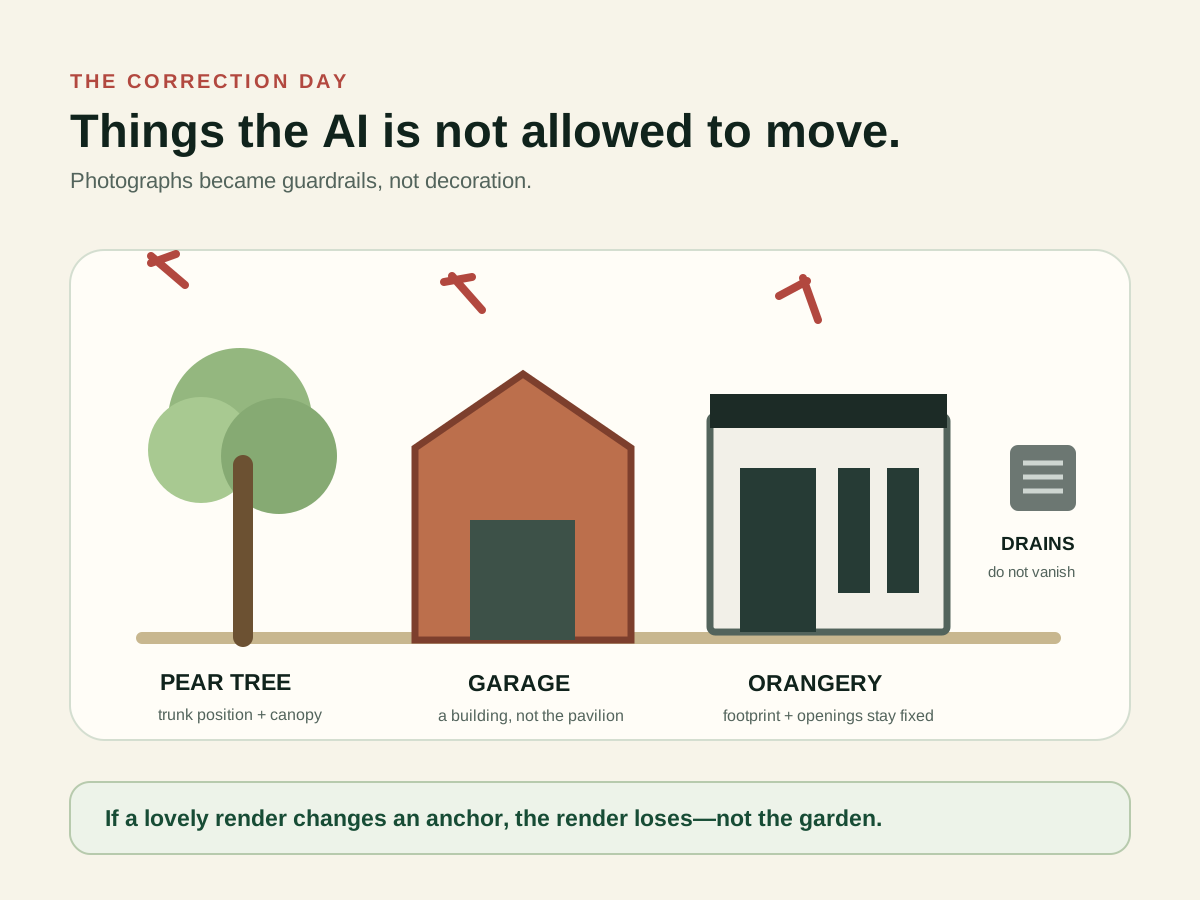
Beautiful is not the same as true.
Every concept keeps its status until measurement, professional input, and the build earn something stronger.
Real-world experiment
The AI Garden Project asks whether two ordinary UK homeowners can use AI, professional input, and their own judgement to redesign and build a real garden without making expensive mistakes. The public record includes the attractive ideas, the broken geometry, the checks, the decisions, and what the physical result eventually changes.
Current truth
The physical baseline is still in progress. Existing visuals and plans are clearly labelled as concepts or working material, not construction-ready proof.
Live
Ongoing experiment
Still building against a real garden, where measurements and quotes can overrule the AI.
Inside the system
This is not a feed of AI renders. It is a governed record of how inputs, decisions, evidence, and outcomes change.
Hand measurements, a zoned plan, a photo atlas, fixed features, and repeatable viewpoints give the models something more useful than a beautiful guess.
Measured inputs · photo atlas · fixed reference facts
Sources, claims, decisions, assumptions, risks, and changes live in linked registers. A confident AI sentence never promotes itself into a verified fact.
Source register · evidence ledger · decision log
Validated source records generate the Journal, Problems, Outcomes, plan, sitemap, and typed public libraries. A broken record fails the build on purpose.
Content generators · schema gates · no draft leakage
AI visuals are dated and labelled as proposals. Public photographs, working plans, edited images, and future as-built evidence each carry their real status.
Before · proposed · built · drift
The garden is the test bench. Measurements, levels, drainage, quotations, build discoveries, planting, and professional checks can overturn the model.
Physical build · accountable checks · visible uncertainty
Privacy, provenance, claim traceability, public review, structured data, and a clear free-versus-paid boundary are designed into the publishing workflow.
Human review · public-safe exports · machine-readable proof
Possible-futures experiment
AppStore2031 works backwards from plausible 2031 worlds (AI capability, work and income, infrastructure, health, relationships, ownership, and regional divergence) to imagine the products and entirely new categories those worlds might create. Every fictional ranking is paired with the reasoning, evidence, and uncertainty underneath it.
Current truth
The first inventory was withdrawn because it felt too much like 2026 with better AI. Its replacement is still being challenged for breadth before the public forecast is declared complete.
36hrs
Unattended Codex build
Research, generation, and storefront, all built unattended while we kept running Collab365 Spaces.
An inspectable possible future

01
Evidence
What is changing now?
02
Possible worlds
What could be different?
03
Fictional Top 10
What becomes worth building?
VISIBLE
Sources and assumptions
FICTIONAL
Apps, rankings, reviews
REFRESHABLE
New evidence, new edition
Inside the system
The storefront is the invitation. The real product is the inspectable chain from evidence to world change to fictional listing, and the willingness to withdraw a weak answer.
Researchers start with changes in AI capability, work, ownership, infrastructure, health, climate, relationships, and everyday life, not with today’s App Store categories.
Horizon scan · weak signals · counter-forces
Several coherent 2031 worlds and geographic lenses expose how the same product can rise, fall, or disappear as institutions, resources, and power change.
Possible worlds · regional lenses · visible uncertainty
The research asks what people, communities, organisations, and public services need to finish in each world. Categories emerge from those jobs rather than Apple’s present menu.
Changed needs · new boundaries · no fixed category quota
Fresh authors imagine future-native products before separate critics compare them with present markets, challenge collisions, and test whether they are genuinely 2031-dependent.
Separated contexts · collision checks · recorded rejections
Each fictional listing explains what changed in the world, why the product becomes necessary, how it might be built, why it holds its rank, and what could move it.
Sources · causal chain · counter-case · rank movement
When the first forecast felt too much like 2026 with better AI, it was withdrawn rather than polished into credibility. The failure and replacement method remain inspectable.
Public postmortem · research history · refreshable editions
Shaun did not ask for technology theatre. He wanted Priorslee, a local car parts business, to be understood when people ask AI where to buy car parts in Telford. The website also needed to be useful to the customers who already call, message and walk into the shop.
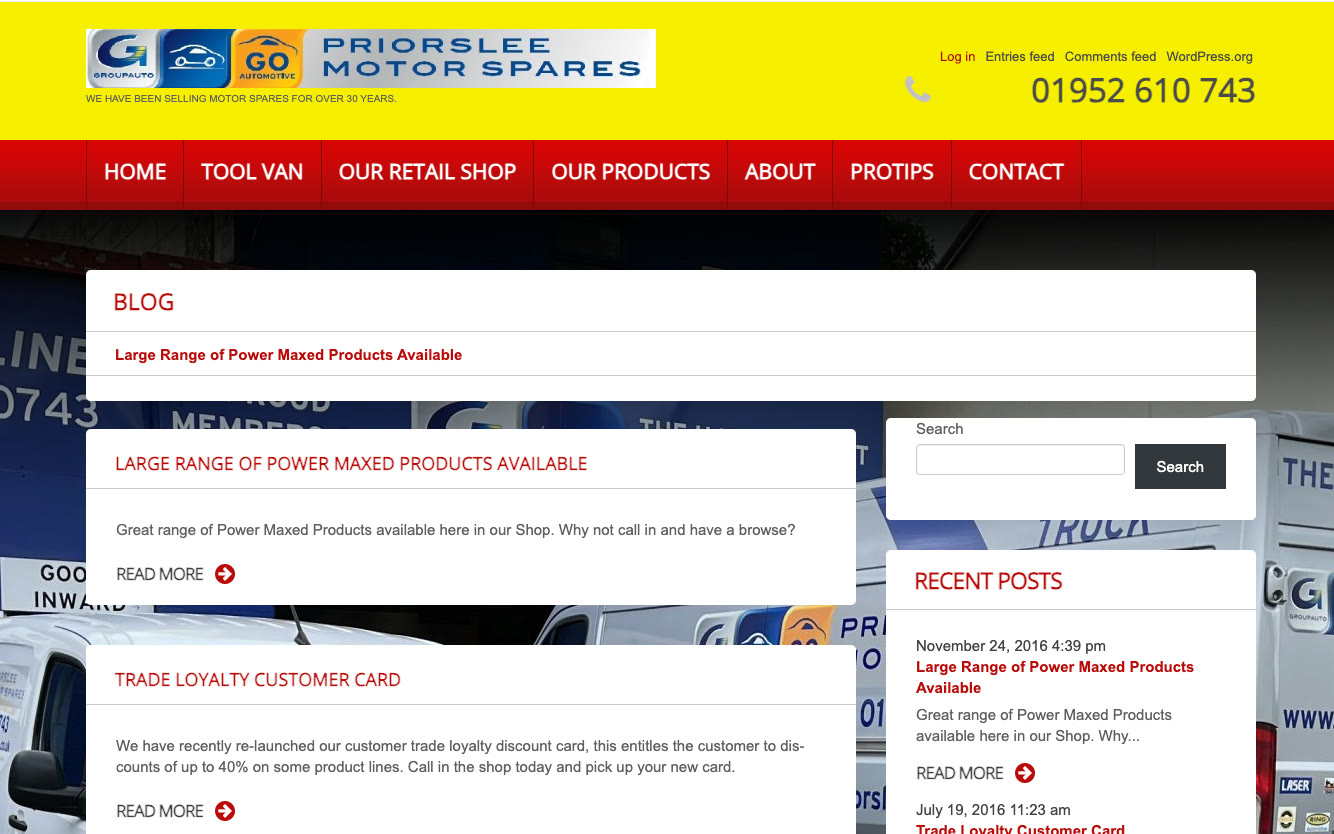
Thirty public routes. No useful starting point.
The homepage opened on a blog last updated in 2016. The business, its people and the next customer action were buried underneath the template.
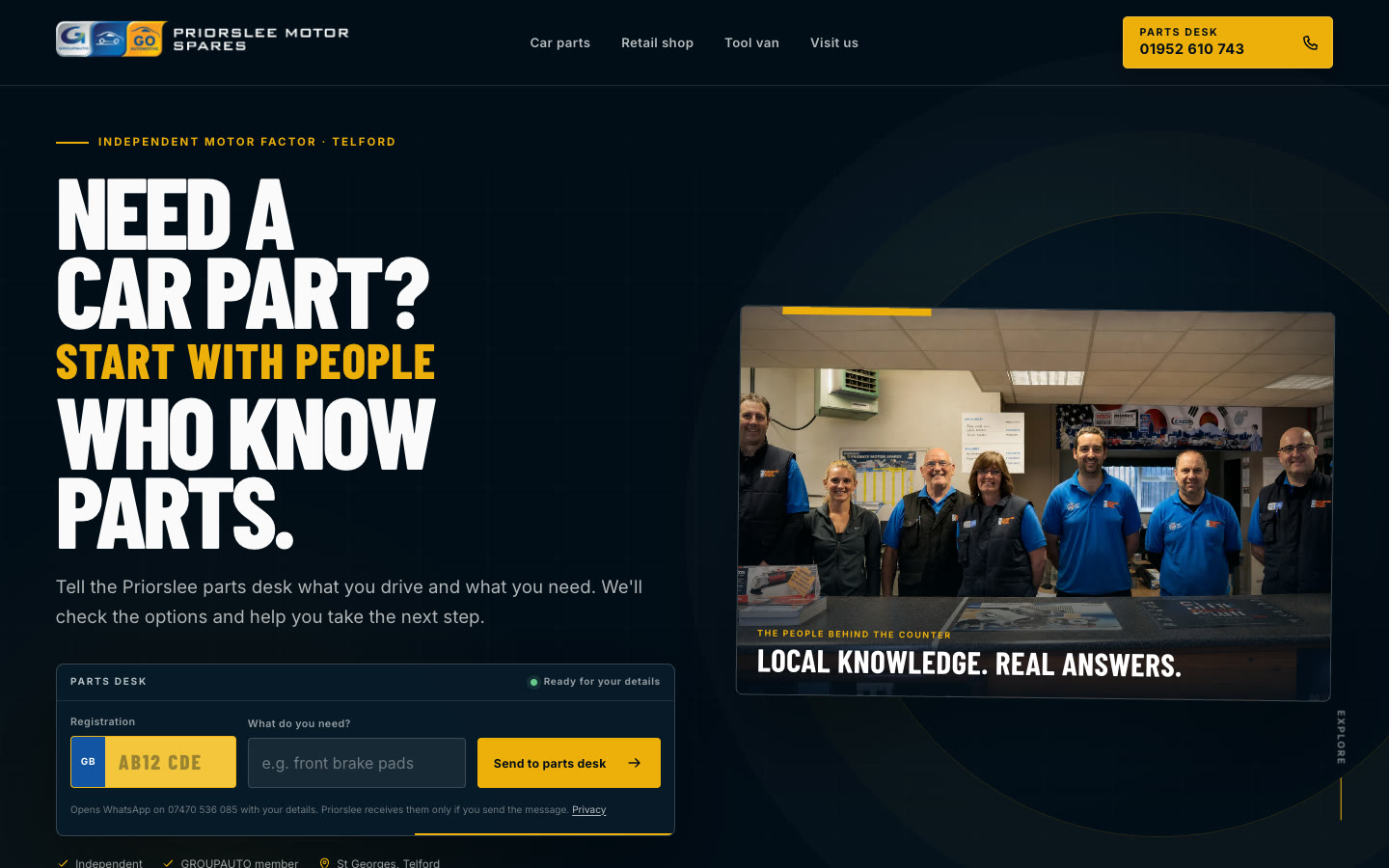
One clear promise. Three useful next steps.
Call the parts desk, send a registration by WhatsApp or get directions, all supported by real people, real opening hours and answers to the questions customers actually ask.
30
public routes audited
1
working day to first live release
56
customer questions answered
0
email DNS records changed
Why one page works better
No one can promise a recommendation from ChatGPT. We can give AI search better facts to work with. Priorslee's focused one-page site answers 56 real customer questions and repeats the important business details in a behind-the-scenes format that search engines and AI tools can understand. When Shaun wants a change, he sends it to Mark. Mark works with AI, checks the result and updates the site without wrestling with WordPress.
The parts desk, retail shop, tool van and next customer action all live in one clear journey.
The FAQs and structured business details give search and AI tools clear, consistent facts to work with.
Shaun sends the change in plain English. Mark works with AI to update it, then checks the result.
Your website should earn its keep
Send us the website and the one job it is failing to do. We will start with the business problem, not a fashionable feature list.
Mark and Helen shipped Foldami and AppStore2031 in 55 unattended hours while running Collab365 Spaces. That only works because the sources, state, rules, checks, and owner are explicit. Priorslee shows what happens when that method leaves our lab and meets a customer’s real business, reputation and live domain.
We push AI this hard so we can prove what holds up, use it responsibly for real work, and bring the repeatable method back into Collab365 Spaces.
Read the full Collab365 rebuild storyVerification belongs in the architecture.
Evidence and uncertainty stay attached to the claim.
Repeatable workflows beat one brilliant prompt.
Human judgement owns the outcome.